
craigslist
craigslist.orgShopping
4.732.47K Reviews
- Version
- 1.29.1
- Installs
- 10.00M
- Age Rating
- Teen
Screenshots
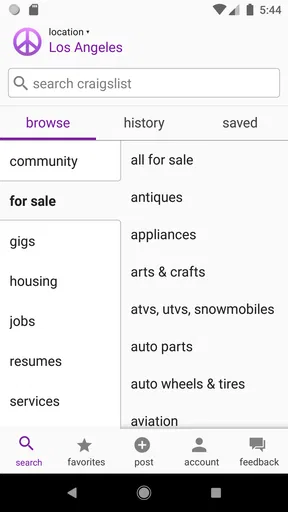
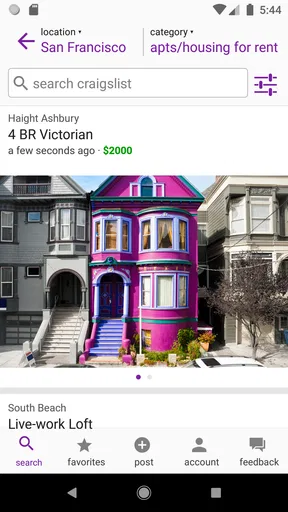
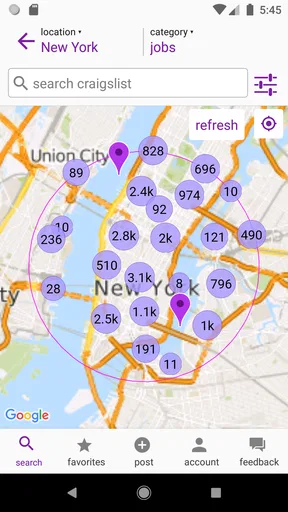
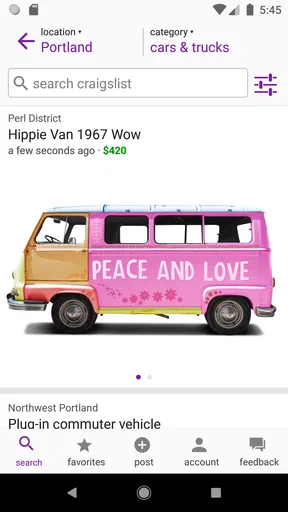
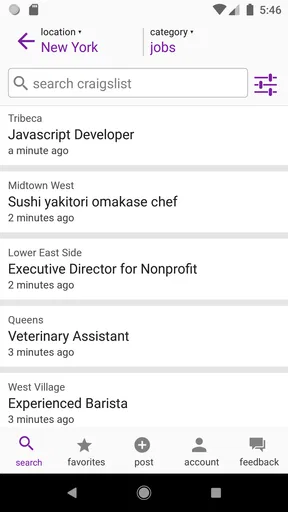

Our Review of craigslist
 Analysis by Appyee
I came away from craigslist with a simple impression: it is most useful when you already know what you want and are willing to do a little work yourself. This free shopping app from craigslist.org is not a polished department store, a curated marketplace, or a delivery service. It is a direct meeting place for people posting things, services, jobs, rentals, and local opportunities. That roughness is also its appeal.
In my experience, the app makes sense for practical searches: a second-hand desk near home, a room to rent, a local repair service, temporary work, or a way to sell something without building a full online shop. The interface and listings feel intentionally straightforward, so the value comes from the breadth of local posts rather than from visual presentation or guided recommendations.
Its store rating is a strong 4.7 from around 266 thousand ratings, and the app has passed 10 million installs. Those figures suggest that many people find the direct approach worthwhile. I would still not recommend it blindly to everyone. If you want guaranteed condition checks, integrated shipping, buyer protection, or a highly controlled shopping experience, a more specialized marketplace will usually suit you better.
Why the direct local-market approach works
I find the direct local-market approach most useful when a need depends on place, timing, or personal coordination—not just on finding the lowest price. It lets me look beyond conventional retail listings, while still requiring me to judge each opportunity on its own merits. Next, I’ll explain what that breadth offers in everyday searches.
A useful window into nearby opportunities
The biggest strength is the range of things people use it to find. The app covers ordinary buying and selling, but it also reaches into work, hiring, housing, sharing, services, and community connections. That makes it different from an app focused only on retail goods. I can open it with a very specific local need and search in the area where the transaction would actually happen.
That local focus changes how I judge a listing. A used bookshelf is not valuable because it has a perfect product page; it is valuable because it is close enough to collect tonight. A repair offer matters because the person may serve my neighborhood. A rental post matters because location is more important than a glossy presentation. The app is at its best when distance, timing, and direct communication matter more than brand identity.
The developer, craigslist.org, has kept the experience centered on browsing and contacting rather than turning every interaction into a long checkout flow. I appreciate that when I am comparing several local possibilities. I can scan titles, prices, descriptions, and locations without feeling pushed through a sales funnel.
How I search without wasting time
My most useful habit is to start with a narrow search phrase instead of browsing a broad section for too long. A term such as “solid wood desk,” “bike repair,” or “room near transit” gives me a more manageable set of results. I then read the full description before deciding whether a post is worth contacting. This matters because titles can be vague, while the important details are often buried in the wording.
I also treat the app as a lead finder rather than a final decision-maker. When I see something promising, I compare the location, condition, timing, and total effort involved. A cheap item across town may be a worse deal than a slightly more expensive one nearby once transport and time are included. That is one of the less obvious trade-offs of a local classified app: the displayed amount is only part of the cost.
For sellers, the same principle works in reverse. A clear title and a description that answers practical questions can save a surprising amount of back-and-forth. I would include dimensions, condition, pickup expectations, and the times I can respond. A vague post may attract messages, but it also attracts unnecessary questions and makes serious buyers less confident.
A realistic everyday use case
Imagine moving into a new apartment with a limited budget. I might use the app to look for a table, shelves, a chair, and a local person who can help with a small repair. Instead of visiting several stores and paying for delivery, I can search nearby posts and arrange collection or a meeting directly. The process is less seamless than ordering new furniture, but it can be much more flexible.
The important part is planning the conversation. I would ask whether the item is still available, confirm the exact location, request any missing measurements, and agree on a meeting time before traveling. If the item is large, I would also check whether I need help carrying it. These steps sound basic, but they prevent the common mistake of treating a classified listing like a normal online product page.
Where it compares well with other marketplace apps
Compared with polished resale platforms, this app feels less focused on standardized listings and shipping. That can be a disadvantage when I want a predictable purchase, but it is an advantage when I want something local, unusual, bulky, or service-based. A large piece of furniture, a neighborhood job, or a short-term rental does not always fit neatly into a conventional shopping cart.
Compared with social-media marketplace sections, the experience feels more purpose-built for classified browsing. I am less dependent on a personal feed or algorithmic discovery. On the other hand, social platforms may offer more familiar messaging, identity signals, or visual context in some situations. I would choose between them based on the type of transaction, not on the assumption that one is always safer or better.
Compared with dedicated job, rental, or service apps, craigslist can be broader but less specialized. A focused rental platform may provide more structured property information. A job platform may offer better application tools. A service marketplace may handle reviews or payments more directly. craigslist is strongest when I want to search across local possibilities and make my own judgment.
The friction I would not ignore
The app demands more attention than a fully managed marketplace. Listings can vary greatly in detail, tone, and usefulness. Some posts make the next step obvious; others leave basic questions unanswered. I have to inspect the wording carefully rather than assuming that every listing follows the same standard.
Communication is another point where patience matters. A good post does not guarantee a quick reply, and a quick reply does not guarantee that the item or opportunity is still available. I would never make a long journey based only on an initial message. Confirming shortly before leaving is a practical habit, especially for time-sensitive listings.
There is also a difference between finding an opportunity and completing a transaction. The app can put me in contact with a seller, landlord, employer, or service provider, but I still need to evaluate the person and the arrangement. That independence is useful for experienced users, yet it can feel like extra work for someone who expects the app to verify every detail.
Safety and judgment are part of using it well
I would use ordinary caution with every local classified interaction. I prefer public meeting places for smaller exchanges when practical, tell someone where I am going, and avoid rushing because a listing sounds urgent. For expensive items, I inspect the item before committing. For rentals, jobs, and services, I ask questions that clarify the arrangement rather than relying on a short description.
I also avoid sharing more personal information than necessary at the beginning. A conversation can start with the item or opportunity itself. If a request feels unusual, pressures me to act immediately, or asks for sensitive information before the basics are clear, I step back. The app is not a substitute for common sense, and its open classified style makes that especially important.
One useful trade-off is that direct contact can reveal details a formal listing would hide, but it can also create ambiguity. I may be able to negotiate a pickup time or ask for a better explanation, yet there may be no standardized process to resolve a disagreement. I would use the flexibility for ordinary local transactions, while choosing a more protected service for purchases where losing money would be difficult.
Who will get the most from it
I think it is a good fit for people who are comfortable comparing options, asking direct questions, and arranging local meetings. It suits bargain hunters, people furnishing a home, independent sellers, job seekers exploring local posts, and anyone looking for a service that may not appear in a conventional online store.
It is also useful for someone who wants to sell an awkward or bulky item. Shipping platforms are inconvenient for a sofa, workbench, appliance, or large collection of household goods. A local classified listing lets the buyer think about pickup from the start. That can make the exchange simpler, even though it requires coordination.
People who should skip it are those who want a one-click purchase, guaranteed delivery, extensive seller histories, or a highly consistent customer-support process. It may also frustrate users who dislike negotiating or who do not want to spend time filtering incomplete posts. For those needs, a specialized marketplace with structured checkout and clearer protections is a better choice.
Practical ways to get better results
I would save a small checklist before contacting anyone. For an item, I want the condition, dimensions, age if relevant, included parts, location, and pickup window. For a service, I want the scope of work, availability, estimated total cost, and what the provider expects from me. For a job or rental, I want the basic terms in writing before taking the next step.
When selling, I would use the first lines to answer the questions a serious person is likely to ask. “Available” is not enough; the reader needs to know what it is, where it is, and what condition it is in. I would remove the post once the transaction is complete if the app allows that through its normal controls, because outdated listings waste everyone’s time.
I would also search more than once when timing matters. Local classified activity changes, and a single visit may not show the best option. At the same time, I would not assume that the newest-looking post is automatically the best. A detailed older listing may be more useful than a recent one-line post, provided I confirm that it is still active.
Device support and basic expectations
The app is available for Android devices running Android 7.0 or later. Its current version is 1.29.1, and it carries a Teen content rating. It is free to install, which makes it easy to try without committing money before I know whether local listings in my area are useful.
The app was released on December 2, 2019, and its broad purpose remains practical rather than flashy. I would not install it expecting entertainment features or a shopping experience built around product discovery. I would install it because I have a local problem to solve and want another place to look.
My final judgment
After using it as a local classified tool, I see craigslist as a strong option for independent shoppers and sellers who value reach, flexibility, and direct contact over polish. Its range is impressive because the same app can support a household purchase, a work search, a service request, or a rental search. That breadth gives it a usefulness that narrower shopping apps often lack.
Its weakness is inseparable from its strength. The open, direct format means I have to do more checking, communicating, and personal judgment. There is no reason to pretend that this is effortless shopping. It is better understood as a practical local noticeboard in app form, where the quality of the result depends partly on how carefully I search and how clearly I communicate.
With around 32 thousand written reviews and a 4.7 average, its reception reflects the fact that the straightforward model works for many people. I would recommend it to a careful user who wants local deals, services, work, housing leads, or a way to sell larger items. I would not make it my first choice for high-risk purchases or anyone who wants every part of a transaction managed inside the app.
My bottom line: use it when local flexibility matters more than convenience. Search narrowly, read closely, confirm details, and treat every listing as an opportunity to investigate rather than a promise. If that approach suits you, this free shopping app can become a surprisingly practical part of your everyday toolkit.
Verdict
Strengths of craigslist
- Simple, lightweight interface that loads quickly on most devices.
- Wide range of local listings for jobs, housing, services, and items.
- No account is required to browse many listings or contact sellers.
- Location-based searches make it easy to find nearby opportunities.
- Posting fees are low or absent in many categories and locations.
Limitations of craigslist
- Listing quality varies, and some posts may be outdated or misleading.
- Search filters feel basic compared with dedicated marketplace apps.
- Scam attempts and suspicious payment requests require careful attention.
- The app offers limited buyer and seller protection for transactions.
- Some categories and features work better through the mobile website.
Similar Picks in This Category
View All
SHEIN-Shopping Online
Roadget Business PTE. LTD.4.8

Amazon Shopping
Amazon Mobile LLC4.4


Mercado Libre: Compras online
Mercado Libre4.8

Wish: Shop and Save
Wish US Holdings LLC4.7

Alibaba.com - B2B marketplace
Alibaba Mobile4.4
Frequently Asked Questions
What is Craigslist, and what can I use it for?
Craigslist is a classified-advertising platform where people can buy, sell, rent, trade, and search for services, jobs, housing, vehicles, and local events. Listings are organized by city or region, making it useful for finding nearby opportunities. The platform is relatively simple and text-focused, so users should read each post carefully and contact advertisers directly for additional details.
Is Craigslist free to use on Android and iOS?
Browsing Craigslist and contacting many advertisers is generally free, although some categories or posting options may involve fees depending on the location and type of listing. Craigslist’s mobile experience may be accessed through its website or an official mobile solution where available. Before publishing an advertisement, check the current pricing and regional rules because charges and available features can vary.
How can I stay safe when buying or selling on Craigslist?
Use caution with every transaction, especially when communicating with people you do not know. Keep conversations on Craigslist or another traceable channel, avoid sharing unnecessary personal information, and meet in a busy public place during daylight hours. Never send money before verifying an item, be suspicious of urgent requests or unusually low prices, and consider bringing someone with you.
Does Craigslist verify listings, sellers, jobs, or rental properties?
Craigslist provides a platform for advertisements but does not guarantee that every listing, seller, employer, landlord, or service provider is legitimate. Users are responsible for checking information independently. Watch for copied descriptions, pressure to move communication off-platform, requests for deposits, fake checks, and offers that seem too good to be true. Research names, addresses, companies, and property details before proceeding.
What should I do if I find a suspicious or prohibited Craigslist post?
If a listing appears fraudulent, abusive, illegal, or inconsistent with Craigslist’s rules, avoid contacting the poster or sending any payment. Use the available flagging or reporting options on the listing page and preserve relevant messages or screenshots if needed. For serious threats, identity theft, or financial fraud, contact local law enforcement or the appropriate consumer-protection authority.
